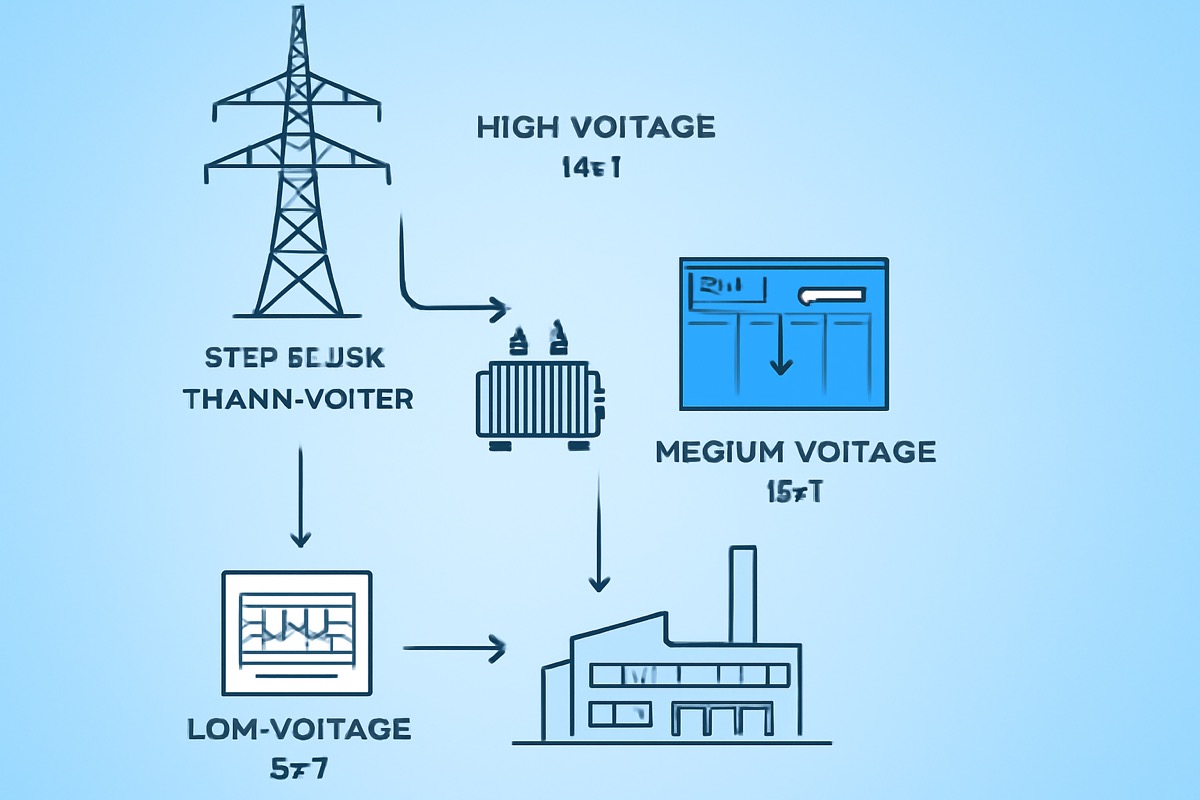
Quick Answer: How to Select the Right Medium Voltage Switchgear
For industrial plants, commercial buildings, and utility substations operating at 1 kV to 52 kV, medium voltage (MV) switchgear is the critical equipment that protects your electrical infrastructure, isolates faults, and enables safe maintenance. The right selection depends on four factors: voltage class (12 kV covers 70%+ of applications), current rating (630 A to 4000 A), breaking capacity (20 kA to 50 kA), and installation environment (indoor vs outdoor, space constraints, climate). This guide covers everything you need to make a confident selection.
What Is Medium Voltage Switchgear?
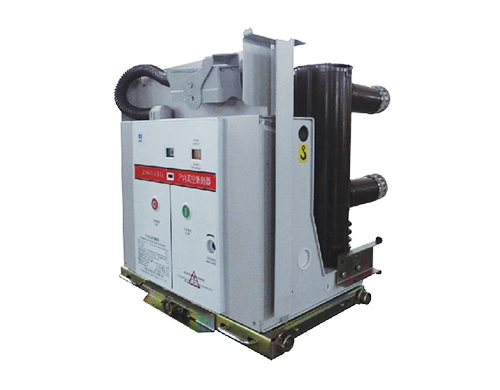
Medium voltage switchgear is an assembly of switching devices, protection relays, busbars, and enclosures designed to control, protect, and isolate electrical equipment in the 1 kV to 52 kV range. It sits between the utility transformer and your low-voltage distribution system, serving as the backbone of industrial power distribution.
Every industrial facility, hospital, data center, mining operation, and commercial building above a certain power demand requires MV switchgear. The equipment performs three critical functions:
- Protection: Automatically disconnects faulty circuits within 50-100 milliseconds to prevent equipment damage and fire
- Switching: Enables controlled energization and de-energization of transformers, motors, and feeders
- Isolation: Provides visible, verifiable isolation for safe maintenance per IEC 62271-102
The "medium voltage" classification per IEC 62271-200 covers rated voltages from 1 kV to 52 kV. In practice, the most common voltage classes are 12 kV (used in roughly 70% of all MV installations globally), 24 kV, 36 kV, and 40.5 kV.
Types of Medium Voltage Switchgear
Understanding the different switchgear types is essential because each serves different application requirements. Here is a systematic breakdown:
By Insulation Medium
| Type | Insulation | Footprint | Voltage Range | Typical Cost (12kV panel) | Best For |
|---|---|---|---|---|---|
| Air-Insulated (AIS) | Air | Large | 1-40.5 kV | $3,000-$8,000 | Standard indoor installations |
| Gas-Insulated (GIS) | SF6 / N2 | Very compact | 12-252 kV | $8,000-$20,000 | Space-constrained, harsh environments |
| Solid-Insulated (SIS) | Epoxy resin | Compact | 12-24 kV | $5,000-$12,000 | SF6-free requirement, underground |
By Enclosure Construction
| Construction | IEC Standard | Key Feature | Safety Level | Application |
|---|---|---|---|---|
| Metal-Clad | IEC 62271-200 | Full metal barriers + automatic shutters | Highest | Utility substations, critical facilities |
| Metal-Enclosed | IEC 62271-200 | Metal housing, partial barriers | High | Industrial plants, commercial buildings |
| Compartmented | IEC 62271-200 | Metal barriers without shutters | Medium-High | Medium-duty industrial |
For a detailed comparison, see our article: Metal-Clad vs Metal-Enclosed Switchgear.
By Switching Device
The switching device inside the switchgear panel is what actually interrupts fault currents. Three technologies dominate the MV range:
- Vacuum Circuit Breaker (VCB) — Uses vacuum as the arc-extinguishing medium. Dominates at 12-24 kV with 70-80% market share. Mechanical life 10,000-30,000 operations. Maintenance-free sealed interrupter. NAIJI's VS1-12 is our most popular indoor VCB.
- SF6 Circuit Breaker — Uses sulfur hexafluoride gas. Still used in some compact GIS designs and at voltages above 40.5 kV. Being phased out by EU F-Gas Regulation 2024/573.
- Load Break Switch (LBS) — Can make and break load currents but not fault currents. Used in ring main units and secondary distribution where fault protection is provided upstream. NAIJI's FZW28-12 is a smart boundary LBS with integrated fault detection.
For a head-to-head comparison of VCB and SF6, see: Vacuum Circuit Breaker vs SF6: How to Choose.
Voltage Ratings Explained: 3.6 kV to 40.5 kV
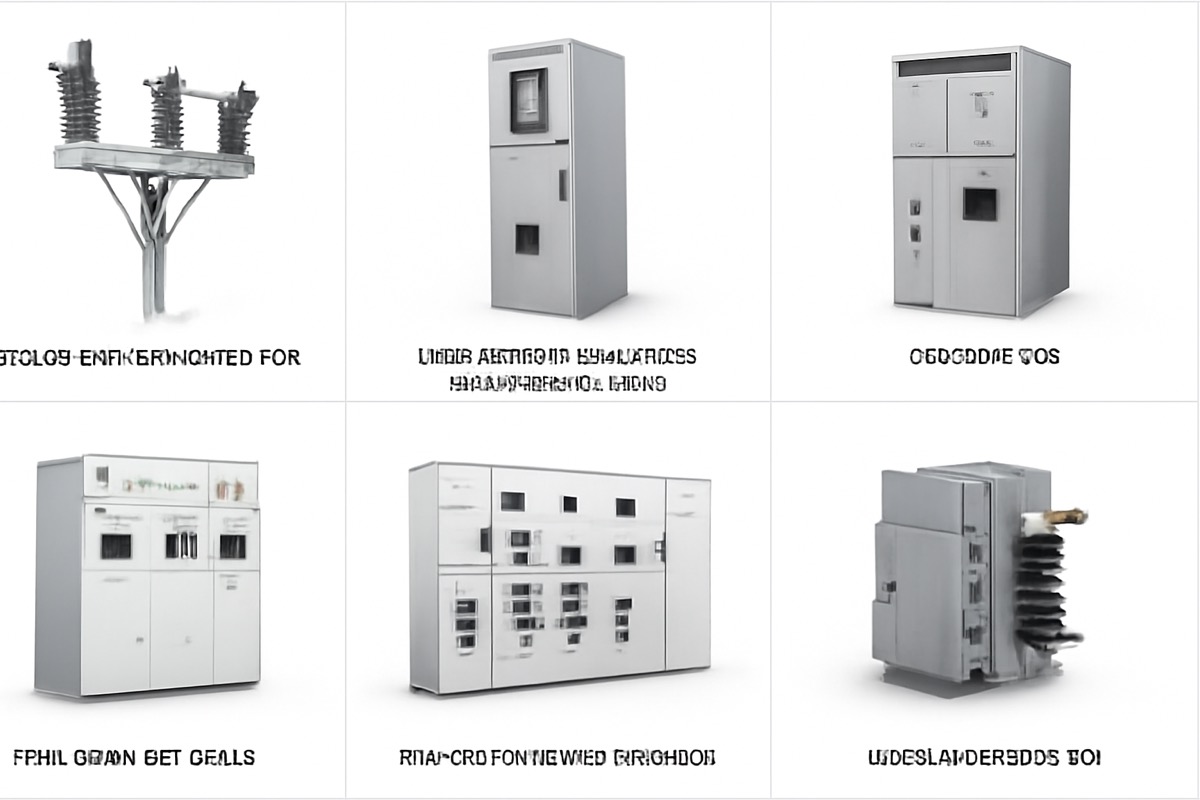
Medium voltage switchgear is designed for specific voltage classes. The rated voltage must be equal to or greater than the system voltage. Here is what each voltage class covers:
| Rated Voltage | System Voltage | BIL (kV) | Common Applications | Global Usage |
|---|---|---|---|---|
| 3.6 kV | 3.3 kV | 40 | Motor control centers, industrial drives | Moderate (mining, heavy industry) |
| 7.2 kV | 6.6 kV | 60 | Large motor starters, captive power plants | Common in India, Middle East |
| 12 kV | 10-11 kV | 75 | Primary distribution, substations | Most common worldwide (70%+) |
| 24 kV | 20-22 kV | 125 | Urban distribution, industrial parks | Growing (Europe, Middle East) |
| 36 kV | 33-35 kV | 170 | Sub-transmission, wind farms | Moderate (renewables sector) |
| 40.5 kV | 35 kV | 185 | Sub-transmission, large industrial | Common in China, Asia |
Key takeaway: If you are specifying switchgear for the first time, start with 12 kV class equipment — it covers the vast majority of industrial and commercial distribution needs. Only move to 24 kV or 36 kV if your system voltage specifically requires it.
How to Select Medium Voltage Switchgear: 8 Critical Factors
Selecting the right MV switchgear requires matching your facility's requirements to the equipment's capabilities. Here are the eight factors that matter most:
1. Rated Voltage (Un)
Must be ≥ your system voltage. For a 10 kV system, specify 12 kV rated switchgear. Always leave margin — never use 7.2 kV rated equipment on a 10 kV system.
2. Rated Current (In)
Determines the maximum continuous current the busbar and connections can carry. Typical ratings: 630 A, 1250 A, 2500 A, 3150 A, 4000 A, 5000 A. Calculate your maximum demand including future expansion (add 20-30% margin). NAIJI's ASN3-12 supports up to 5000 A.
3. Short-Circuit Breaking Capacity (Isc)
The maximum fault current the circuit breaker can safely interrupt. Common ratings: 20 kA, 25 kA, 31.5 kA, 40 kA, 50 kA. Obtain the prospective short-circuit current from your utility or calculate per IEC 60909. Always select a breaking capacity that exceeds the calculated fault level.
4. Internal Arc Classification (IAC)
Per IEC 62271-200 Annex A, switchgear can be classified for internal arc withstand. Classes include IAC-A (accessible sides), IAC-B (restricted sides), and IAC-AFL (front, lateral, rear). Arc-rated switchgear contains the explosion energy from an internal arc fault, protecting personnel. NAIJI's ASN3-12 achieves 50 kA / 1 second internal arc withstand — one of the highest ratings in the industry.
5. Installation Environment
- Indoor (most common): Standard IP4X protection, controlled temperature
- Outdoor: Requires IP54+ enclosure, UV-resistant paint, anti-condensation heaters
- High altitude: Above 1000 m, insulation levels need derating. NAIJI's ASN3-12 is rated for up to 4,500 m altitude without derating
- Corrosive atmosphere: Marine, chemical plant — use stainless steel or special coatings
- Seismic zone: Switchgear must be qualified per IEEE 693 or equivalent
6. Space Constraints
Switchgear room dimensions often limit your choices. Standard 12 kV switchgear panels are 800-1000 mm deep. NAIJI's ASN550 is only 550 mm deep — saving 30-45% of floor space compared to conventional panels, making it ideal for retrofits and urban substations.
7. Automation & Intelligence
Modern switchgear integrates with SCADA systems via IEC 61850 or MODBUS protocols. Intelligent switchgear like NAIJI's ASN3i-12 provides real-time monitoring of temperature, partial discharge, contact wear, and operating mechanism status — enabling predictive maintenance and reducing unplanned outages by up to 40%.
8. Total Cost of Ownership
The purchase price is only 30-40% of the total lifecycle cost. Maintenance, spare parts, downtime, and energy losses add up over the 25-30 year service life. VCB-based switchgear has the lowest lifecycle cost in most 12-24 kV applications due to minimal maintenance requirements.
Industrial Applications & Case Studies
Medium voltage switchgear serves every sector of the economy. Here are the most common industrial applications with specific equipment recommendations:
Manufacturing Plants
A typical manufacturing facility with 5-20 MW demand needs 12 kV switchgear with 25-40 kA breaking capacity. The lineup includes 1-2 incoming panels (from utility transformer), a bus section panel, and 4-10 feeder panels (to distribution transformers, large motors, capacitor banks). Motor feeders above 200 kW often connect directly to MV switchgear to reduce I2R losses.
Data Centers
Reliability is paramount. Data centers use dual-bus MV switchgear configurations with automatic transfer switches (ATS). Internal arc classification IAC-AFL is standard. Space is expensive, making compact designs like GIS or the ASN550 preferred.
Renewable Energy
Wind farms and solar plants use 33-36 kV switchgear at the collector substation. Each wind turbine typically connects to a ring main unit (RMU) at 33 kV. NAIJI's XGN15-12 RMU is used in solar farm collector networks at 12 kV.
Mining & Oil/Gas
Harsh environment applications requiring explosion-proof construction, high altitude tolerance, and robust mechanical design. Vibration resistance per IEC 62271-200 Class AG3 is often specified. NAIJI's ASN3-12 meets AG3 vibration class requirements.
Medium Voltage Switchgear Pricing Guide (2026)
Pricing depends on voltage class, current rating, features, and quantity. Here is a realistic pricing guide based on FOB China factory prices:
| Equipment Type | Voltage | Price Range (per panel, FOB) | Notes |
|---|---|---|---|
| Metal-Enclosed + VCB | 12 kV | $3,000 - $8,000 | Most common, 630-2500A |
| Metal-Enclosed + VCB | 24 kV | $5,000 - $12,000 | Enhanced insulation |
| Metal-Enclosed + VCB | 40.5 kV | $8,000 - $18,000 | Sub-transmission class |
| GIS (gas-insulated) | 12 kV | $8,000 - $20,000 | Most compact, 3-5 yr maintenance |
| Ring Main Unit (RMU) | 12 kV | $2,000 - $5,000 | 3-way or 4-way, compact |
| Outdoor VCB (pole-mounted) | 12 kV | $800 - $2,500 | ZW32-12 type, single unit |
| Complete lineup (8 panels) | 12 kV | $25,000 - $65,000 | Typical industrial project |
Volume discounts: Orders of 20+ panels typically receive 10-15% discount. Complete substation packages (switchgear + transformer + LV panel) offer better pricing than individual component purchases.
NAIJI Electric Medium Voltage Switchgear Product Range
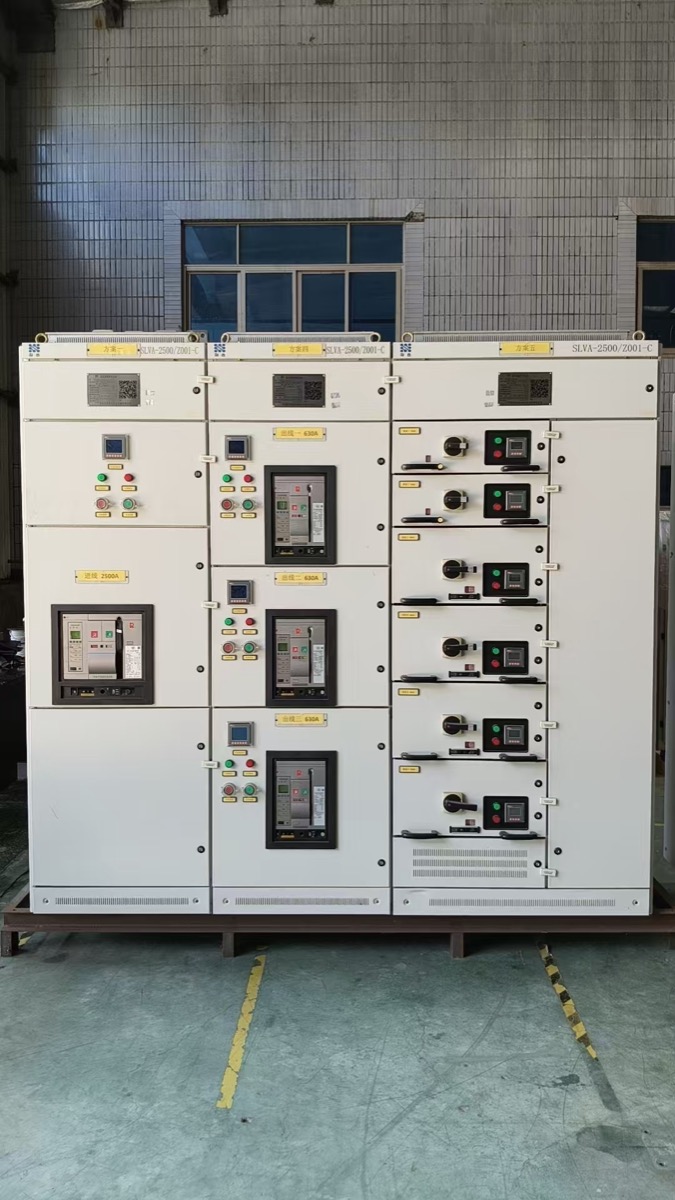
NAIJI Electric manufactures a complete range of medium voltage switchgear covering 12 kV to 40.5 kV, with annual production capacity exceeding 3,000 panels. Our products are installed in power distribution projects across China, Southeast Asia, the Middle East, Africa, and South America.
- ASN3-12 — 12 kV, up to 5000 A / 50 kA, internal arc 50 kA/1s, altitude 4,500 m, AG3 vibration class
- ASN3i-12 — Intelligent version with IEC 61850, partial discharge monitoring, temperature sensors
- ASN550 — Ultra-compact 550 mm depth, ideal for retrofits, up to 1250 A / 31.5 kA
- ASN2-24 — 24 kV, up to 4000 A / 40 kA, internal arc 31.5 kA/0.5s
- ASN1-40.5(G) — 40.5 kV, up to 3150 A / 40 kA, one of the most compact in its voltage class
- GSN3-12 — 12 kV eco-friendly GIS with nitrogen insulation (zero SF6)
All NAIJI switchgear is type-tested per IEC 62271-200 at accredited laboratories and comes with a standard 2-year warranty. We provide engineering support including single-line diagram review, switchgear room layout, protection relay coordination, and commissioning supervision.
Frequently Asked Questions
What voltage range is considered medium voltage switchgear?
Medium voltage covers 1 kV to 52 kV per IEC 62271-200. The most common classes are 12 kV, 24 kV, 36 kV, and 40.5 kV. Approximately 70% of all MV switchgear installations worldwide operate at 12 kV class.
How long does medium voltage switchgear last?
Well-maintained MV switchgear has a service life of 25-30 years. The vacuum interrupters in VCBs are typically rated for 20 years or 10,000 operations. Regular maintenance (visual inspection annually, comprehensive inspection every 5-8 years) extends service life and prevents unexpected failures.
Can I upgrade from 12 kV to 24 kV switchgear in the same room?
Not directly. 24 kV switchgear requires greater clearance distances (phase-to-phase and phase-to-ground) per IEC 62271-200. The switchgear room dimensions, cable entries, and busbar connections would all need redesign. However, some manufacturers offer 24 kV rated equipment with similar footprint to conventional 12 kV panels.
What is the lead time for custom switchgear orders?
Standard configurations (12 kV, common ratings) ship in 4-6 weeks. Custom configurations (special voltages, non-standard features, project-specific protection schemes) require 8-12 weeks. Complete substation packages with transformers and LV panels typically take 10-16 weeks.
Do you provide commissioning support?
Yes. NAIJI Electric provides remote commissioning guidance for all orders and on-site commissioning supervision for projects above $50,000. Our commissioning engineers cover primary injection testing, protection relay setting, interlocking verification, and insulation resistance measurements.
Ready to Specify Your Switchgear?
Whether you are building a new industrial facility, upgrading an aging substation, or expanding capacity, NAIJI Electric can help you select and deliver the right medium voltage switchgear solution.
What to include in your inquiry:
- System voltage and frequency
- Prospective short-circuit current (from utility or your own calculation)
- Number of panels and circuit configuration (single-line diagram if available)
- Installation environment (indoor/outdoor, altitude, temperature range)
- Any special requirements (internal arc, seismic, intelligent features)
Our engineering team will provide a preliminary design and commercial proposal within 3 business days.
Request a Switchgear Quotation →
Related guides: Metal-Clad vs Metal-Enclosed | Types of Electrical Switchgear | GIS Complete Guide | VCB vs SF6 | What Is Medium Voltage?