Quick Answer: The 12 Things Your RFQ Must State
A medium voltage switchgear specification produces comparable quotations only if it fixes twelve numbers: standard system, rated voltage, insulation level, frequency, busbar and feeder continuous current, short-time withstand current and duration, short-circuit breaking and making current, internal arc classification, LSC and partition class, construction type, protection and metering functions, and auxiliary voltages — plus site conditions. Everything else in a tender document is refinement. This guide walks through each one, explains what it costs when you get it wrong, and ends with a data sheet you can copy into your enquiry.

What a Vague Specification Actually Costs
We quote several hundred medium voltage enquiries a year for export projects. Roughly two thirds arrive incomplete, and the incompleteness is remarkably consistent. The five most common omissions, in order:
| Missing item | How often | Consequence |
|---|---|---|
| Site altitude | ~70% of enquiries | Wrong insulation class supplied; equipment fails site testing above 1,000 m |
| Internal arc classification | ~60% | Untested enclosure quoted against a tested one; 15-25% price gap |
| LSC / partition class | ~55% | LSC1 quoted against LSC2B PM; up to 30% price gap and no shutters |
| Short-circuit duration (1 s vs 3 s vs 4 s) | ~40% | Busbar and earthing switch undersized; requote after clarification |
| Auxiliary and control voltage | ~35% | Wrong coil and motor voltages; rework at site |
None of these are exotic. They are all one line in a data sheet. The cost of leaving them out is measured in clarification rounds — each one adding 3-7 days to the schedule — and in bid spreads so wide that procurement cannot tell a cheap supplier from a non-compliant one.
Step 1: Fix the Standard System — and Do Not Mix
The first line of the specification should name the standard system and stop there.
| Aspect | IEC route | ANSI/IEEE route |
|---|---|---|
| Assembly standard | IEC 62271-200 (1 kV to 52 kV) | IEEE C37.20.2 (metal-clad), C37.20.3 (metal-enclosed interrupter) |
| Circuit breaker standard | IEC 62271-100 | IEEE C37.04 / C37.06 / C37.09 |
| Common clauses | IEC 62271-1 | IEEE C37.100.1 |
| Instrument transformers | IEC 61869-2 (CT), 61869-3 (VT) | IEEE C57.13 |
| Construction classification | LSC1 / LSC2A / LSC2B + PM / PI | Metal-clad vs metal-enclosed |
| Typical voltages | 3.6, 7.2, 12, 17.5, 24, 36, 40.5 kV | 4.76, 8.25, 15, 27, 38 kV |
| Short-circuit rating expressed as | kA rms for 1 s / 3 s / 4 s | kA rms symmetrical with a separate close-and-latch value |
The two systems are not interchangeable at the detail level. An IEC 12 kV rating is not the same as an ANSI 15 kV class — the ANSI class carries a higher maximum design voltage and different BIL. Asking for "12 kV, metal-clad per C37.20.2, type tested to IEC 62271-200" is a contradiction that every serious bidder will query. Our IEC 62271 standards guide maps the series clause by clause, and the metal-clad vs metal-enclosed article reconciles the two naming systems.
Step 2: Electrical Ratings — From the System Study, Not the Last Project
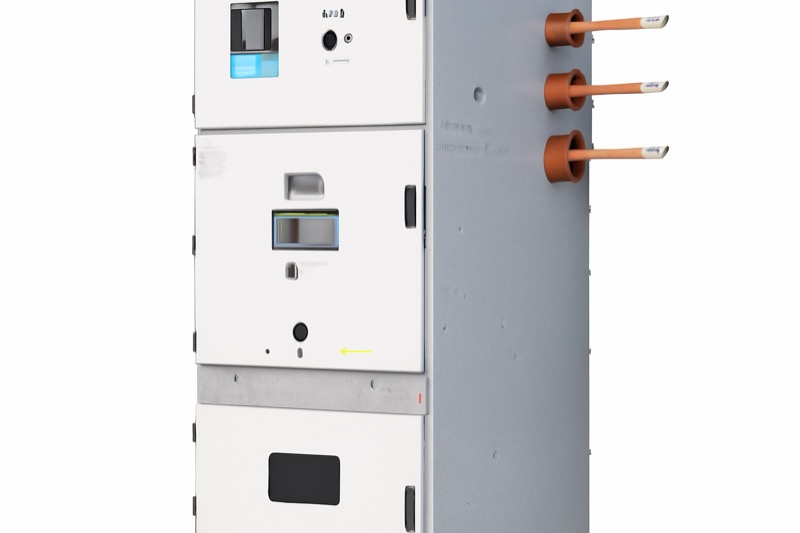
Every rating below has a direct cost consequence, so each should come from a short-circuit and load flow study rather than being copied forward.
| Rating | Symbol | Common values | Cost sensitivity |
|---|---|---|---|
| Rated voltage | Ur | 12 / 24 / 40.5 kV | High — drives clearances, bushings, bay width |
| Lightning impulse withstand (BIL) | Up | 75 kV at 12 kV; 125 kV at 24 kV; 185 kV at 40.5 kV | High — fixed by voltage class and altitude |
| Power-frequency withstand, 1 min | Ud | 42 kV at 12 kV; 50 kV at 24 kV; 95 kV at 40.5 kV | Included with class |
| Rated frequency | fr | 50 or 60 Hz | Low, but must be stated for CT and relay sizing |
| Busbar continuous current | Ir | 630 / 1,250 / 1,600 / 2,500 / 3,150 A | Medium — copper cross-section |
| Feeder continuous current | Ir | 630 / 1,250 A typical | Medium |
| Short-time withstand current + duration | Ik / tk | 20 / 25 / 31.5 / 40 kA for 1 s, 3 s or 4 s | High — 25 to 31.5 kA moves a bay 10-15% |
| Peak withstand current | Ip | 2.5 × Ik at 50 Hz; 2.6 × at 60 Hz | Derived, but state it |
| Short-circuit breaking current | Isc | Matches Ik | High |
| Short-circuit making current | — | = Ip | Applies to breaker and earthing switch |
| Operating sequence | — | O-0.3s-CO-180s-CO | Low, but affects auto-reclose duty |
The duration trap. "31.5 kA" alone is incomplete. 31.5 kA for 1 s and 31.5 kA for 3 s are different products: the thermal energy the busbar must absorb scales with I²t, so tripling the duration triples the energy and forces larger bars and stronger supports. Utility specifications commonly ask for 3 s or 4 s; industrial specifications usually accept 1 s. Say which. Our short-circuit rating calculation guide shows how to derive these from the utility fault level, and circuit breaker ratings explained covers what each nameplate figure governs.
Step 3: Construction and Classification
This is where the same words describe very different hardware, and where bid spreads open up widest.
- Loss of service continuity: LSC1 (others must be de-energized), LSC2A (busbar stays live), LSC2B (busbar and adjacent cable compartments stay live). Utility and critical industrial work almost always needs LSC2B.
- Partition class: PM (partial metallic, earthed metal partitions and shutters) or PI (partial insulating). Specify PM where you want ANSI metal-clad equivalence.
- Internal arc: the full Annex AA code, e.g.
IAC AFLR 31.5 kA 1 s. A = authorized personnel access; F, L, R = front, lateral, rear protected. - Construction: drawout (withdrawable truck with service / test / isolated positions) or fixed-mounted. Fixed is roughly 10-20% cheaper per bay but requires a full bay outage for breaker maintenance.
- Degree of protection: IP4X enclosure and IP2X between compartments is the usual indoor requirement; IP54 for dusty or humid plant rooms.
- Cable entry: bottom or top, front or rear access, number and size of cables per phase per feeder. State it — it fixes the bay depth.
The single sentence that resolves most ambiguity: "Switchgear shall be metal-enclosed to IEC 62271-200, classified LSC2B, partition class PM, internal arc classified IAC AFLR 31.5 kA 1 s, with withdrawable vacuum circuit breakers." That one line removes three of the five commonest omissions. NAIJI's ASN3-12, ASN2-24 and ASN1-40.5 are built to that construction; the compact ASN550 and the GSN3-12 gas-insulated design cover space-constrained rooms.
Have a draft specification you want checked before it goes out to tender? Send it over — our engineers will flag the gaps that cause requotes, at no cost. Contact NAIJI Electric.
Step 4: Protection, Metering and Control
Protection is the largest single variable cost inside an MV bay, at 20-35% of bay price, so specify function rather than brand unless the brand is genuinely mandated by an existing SCADA estate.
| Application | ANSI device functions | Notes |
|---|---|---|
| Incomer | 50/51, 50N/51N, 27, 59, 81, 32, 25 (if paralleling) | Add 87B for busbar differential on critical schemes |
| Bus tie | 50/51, 50N/51N, 25 | Synchro-check where closing onto a live bus |
| Transformer feeder | 50/51, 50N/51N, 87T, 49, 63/26 (trip inputs) | 87T needs matched CT ratios both sides |
| Motor feeder | 49, 50, 51, 46, 37, 66, 51LR | Thermal model settings from motor data sheet |
| Capacitor bank | 50/51, 59, 60, 51N | Unbalance protection essential |
| Line feeder | 50/51, 50N/51N, 79, 67 where directional | 79 auto-reclose only on overhead circuits |
Then state the supporting items that are routinely forgotten:
- CT ratios, class and burden — e.g. 600/5 A, 5P20, 15 VA for protection; 0.5S for metering. Separate cores for protection and metering.
- VT ratios and class — e.g. 11,000/√3 : 110/√3 V, class 0.5 / 3P, with primary fuses.
- Auxiliary voltages — closing coil, tripping coil, spring charging motor, space heaters and lighting. DC 110 V and DC 220 V are the usual control voltages; AC 230 V for heaters. State each separately.
- Communication — IEC 61850 (state edition and whether GOOSE is required), Modbus RTU/TCP or DNP3. IEC 61850 with GOOSE typically adds cost and factory test time; ask for it only if the SCADA will use it.
- Trip circuit supervision, lockout relay (86), and local/remote selector — cheap items that cause site rework when unstated.
Our MV protection relay guide and relay type selection guide cover function selection in depth.
Step 5: Site Conditions — the Altitude Clause Everyone Forgets
IEC 62271-1 defines normal service conditions as altitude not exceeding 1,000 m, ambient air temperature not exceeding +40 °C with a 24-hour average not exceeding +35 °C, and a minimum of −5 °C, −15 °C or −25 °C depending on the class.
Above 1,000 m the insulation must be corrected by the factor:
Ka = e^(m(H − 1000)/8150)
where H is altitude in metres and m = 1 for power-frequency and lightning impulse withstand on this class of equipment. Worked examples:
| Site altitude | Correction factor Ka | Required withstand uplift | Practical solution for a 12 kV system |
|---|---|---|---|
| 1,000 m | 1.00 | None | Standard 12 kV equipment |
| 1,500 m | 1.06 | +6% | Standard 12 kV, verify with maker |
| 2,000 m | 1.13 | +13% | Uprated 12 kV or 17.5 kV class |
| 2,500 m | 1.20 | +20% | 24 kV class equipment for a 12 kV system |
| 3,500 m | 1.36 | +36% | 24 kV class plus continuous current derating |
Continuous current also derates with altitude because thinner air removes less heat — typically around 0.5% per 100 m above 1,000 m. Projects in the Andes, the Ethiopian highlands, Central Asia and western China hit this constantly, and it is the single most expensive omission we see because it changes the equipment class after the price is agreed.
Other site data to state: ambient maximum and minimum, relative humidity, seismic zone or required spectrum, pollution level for outdoor components, and whether the room is air-conditioned. Also give the physical constraints — door width, corridor turns, floor loading, ceiling height and arc venting route — before drawings are made, not after. See our installation and commissioning guide.
Step 6: Tests — Separate Type, Routine, FAT and SAT
| Category | Performed on | What to require in the RFQ |
|---|---|---|
| Type tests | A representative design, once | Certificates submitted with the bid: dielectric, short-time withstand, breaking capacity, temperature rise, internal arc, mechanical endurance, IP, EMC |
| Routine tests | Every unit, before dispatch | Power-frequency withstand on main circuit, dielectric on auxiliary circuits, mechanical operation, wiring and function check, protective circuit continuity, measurement of main circuit resistance |
| Factory acceptance test | Your actual assembly | Witnessed or unwitnessed; state the notice period, the test schedule, and whether relay injection testing is included |
| Site acceptance test | After installation | Contact resistance, insulation resistance, vacuum integrity, interlock proving, relay injection, primary injection where feasible |
Requiring type test certificates with the bid rather than after award is the highest-leverage line in any switchgear RFQ. It removes suppliers who intend to test after they win, and it is free to ask. Detail in our switchgear testing standards guide and maintenance and testing guide.
Step 7: Documentation, Spares and Packing
- General arrangement, single-line diagram, schematic and wiring diagrams, terminal plans, foundation and cable entry drawings — state the approval round count and turnaround days
- Bill of materials with make and model of every bought-in component
- Type and routine test reports, factory acceptance test report
- Operation and maintenance manual, in the project language
- Nameplate data and arc-flash labels with the incident energy assessment basis
- Two-year commissioning spares and five-year operational spares, priced separately
- Packing: seaworthy plywood cases, desiccant, moisture indicator, shock indicator on the breaker cases, container loading plan and weights
- Warranty period and response commitment; whether supervision of erection and commissioning is included
Copy-Paste RFQ Data Sheet Template
Paste this into your enquiry and fill in the right column. Bids answering all of it will be genuinely comparable.
| Item | Your value |
|---|---|
| Project name / location / site altitude (m) | |
| Standard system (IEC 62271-200 / ANSI C37.20.2 / C37.20.3) | |
| Rated voltage Ur (kV) and system nominal voltage (kV) | |
| Rated insulation level: BIL (kV peak) / 1 min power frequency (kV rms) | |
| Rated frequency (Hz) | |
| Busbar rated continuous current (A) | |
| Feeder rated continuous current (A), per bay | |
| Rated short-time withstand current (kA) and duration (1 s / 3 s / 4 s) | |
| Rated peak / making current (kA peak) | |
| Neutral earthing method (solid / resistance / resonant / isolated) | |
| LSC class and partition class (e.g. LSC2B PM) | |
| Internal arc classification (e.g. IAC AFLR 31.5 kA 1 s) | |
| Construction (drawout / fixed) and IP degree | |
| Bay schedule: quantity and function of each bay (incomer / tie / feeder / VT / metering) | |
| Protection functions per bay (ANSI device numbers) | |
| Relay brand preference or "compliant equivalent acceptable" | |
| CT ratios, class, burden, cores per bay | |
| VT ratios, class, connection, fusing | |
| Control voltage (DC V) / spring charge motor / heater supply (AC V) | |
| Communication protocol (IEC 61850 / Modbus / DNP3) and SCADA interface | |
| Cable entry: top or bottom, front or rear, cable size and quantity per phase | |
| Ambient temperature range, humidity, seismic requirement | |
| Room constraints: door width, corridor, floor loading, ceiling height, venting route | |
| Paint finish and RAL colour | |
| Test requirements: type certificates with bid? FAT witnessed? SAT scope? | |
| Documentation, spares, packing, warranty, Incoterm and destination port | |
| Required delivery date and drawing approval turnaround |
Ten Specification Mistakes That Trigger a Requote
- Stating kA without the duration
- Saying "arc resistant" instead of an IAC code with accessibility letters and time
- Omitting site altitude on a highland project
- Mixing IEC and ANSI clauses in one document without a priority statement
- Specifying a busbar current lower than the sum of the feeders it must carry
- Naming a relay brand without allowing a compliant equivalent, then comparing on price
- Leaving CT burden and class unstated, so protection cores are undersized
- Forgetting the control voltage, which determines coil, motor and relay power supply
- Not stating cable size and quantity, which fixes bay depth and termination arrangement
- Approving drawings late — the most common cause of a missed delivery date, and one that sits on the buyer's side
If you are also evaluating who to send the RFQ to, our switchgear manufacturer selection guide and China sourcing guide cover audit, certification and payment terms.
What Compliant Bids Should Look Like
| Bay type | Rating | Indicative FOB China | Lead time from approved drawings |
|---|---|---|---|
| 12 kV feeder, VCB, LSC2B PM, IAC AFLR 31.5 kA 1 s | 12 kV / 630-1,250 A / 31.5 kA | $2,800 - $6,500 | 25 - 40 days |
| 12 kV incomer with metering | 12 kV / 1,250-2,500 A | $4,500 - $9,000 | 25 - 40 days |
| 24 kV feeder, VCB | 24 kV / 630-1,250 A / 25 kA | $5,000 - $12,000 | 30 - 45 days |
| 40.5 kV feeder, VCB | 40.5 kV / 1,250-1,600 A / 31.5 kA | $8,000 - $18,000 | 35 - 50 days |
| 12 kV gas-insulated feeder | 12 kV / 630 A / 25 kA | $6,000 - $14,000 | 35 - 50 days |
Prices are indicative, confirmed against your data sheet, and MOQ is flexible — we supply single bays for retrofit and extension work as well as complete lineups. If the lineup is being sized as well as specified, our lineup design and configuration guide covers bay count and bus arrangement, and our LV vs MV switchgear comparison covers whether you need the MV lineup at all.
Bottom Line
A medium voltage switchgear specification is not a technical essay — it is a set of numbers that make bids comparable. Fix the standard system, the ratings with their durations, the classification codes, the protection functions, the auxiliary voltages and the site conditions, and the price spread between compliant suppliers usually falls under 15%. Leave them open and you are not comparing suppliers; you are comparing assumptions.
Send Us Your Specification for a Quotation →
Related guides: IEC 62271 Standards Guide | Metal-Enclosed Switchgear Guide | Short-Circuit Rating Calculation | Choosing a Switchgear Manufacturer | LV vs MV Switchgear | MV Protection Relay Guide