Last Updated: 2026-11-06 · Written by the NAIJI Electric engineering team. We manufacture three-phase outdoor auto reclosers in 15.5 kV, 27 kV and 38 kV classes. Where a figure below is a NAIJI rating, we say so. Everything else is a general selection rule you can apply to any brand.
Key Takeaways
- Match the recloser to the maximum system voltage. On the 15.5 / 27 / 38 kV ladder: 11 kV line → 15.5 kV class, 20–24 kV line → 27 kV class, 33 kV line → 38 kV class (IEC 12 / 24 / 36 kV ratings are the alternative ladder).
- Size the interrupting rating to the fault current at the pole, not at the substation. Ask for the type-test report, not just the brochure figure.
- Phase configuration, controller functions and communications drive more of the project risk than the vacuum interrupter does. Put them in the RFQ in writing.
Quick Answer: How to Choose a Pole-Mounted Recloser
Choose a pole-mounted recloser in this order: (1) rated voltage class from your maximum system voltage; (2) insulation level (lightning impulse withstand) for your altitude and lightning exposure; (3) continuous current and short-circuit breaking current at the installation point; (4) phase configuration, either three-phase ganged or independent poles; (5) controller protection functions, reclose sequence and SCADA protocol; (6) enclosure, temperature range and pollution level for the site; (7) mounting accessories and the test reports you need for acceptance. If the first three are wrong, nothing later in the list can fix them.
If you first need to know how a recloser works, start with our distribution recloser guide. If you are deciding between a three-phase recloser and a single-phase cutout-mounted unit on a lateral, see TripSaver vs recloser. This guide assumes you already need a three-phase recloser on the pole and want to specify it correctly.
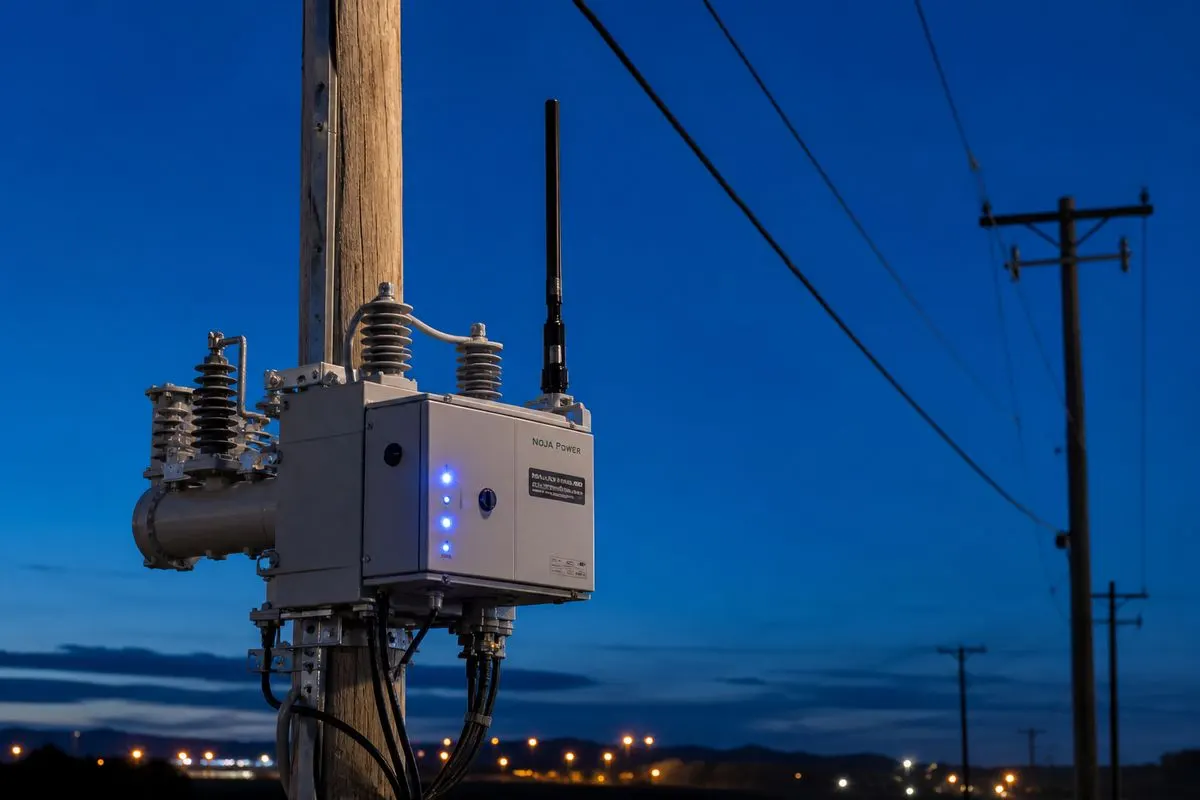
Step 1: Pick the Voltage Class From Your Maximum System Voltage
Recloser voltage ratings are rated maximum voltages, so each class covers a band of nominal system voltages. IEC 62271-111 / IEEE C37.60 includes both the North American classes of 15.5 kV, 27 kV and 38 kV and IEC values such as 12, 24 and 36 kV. Either can be correct for your line. What matters is that the rated maximum voltage is at or above your highest operating voltage, and that the impulse level and type tests meet your utility's specification. The common mistake is comparing a 24 kV quote from one maker with a 27 kV quote from another without checking that both carry the same BIL and the same recloser type tests.
| Nominal system voltage | Recloser class | NAIJI model | Power-frequency withstand | Lightning impulse withstand | Contact gap |
|---|---|---|---|---|---|
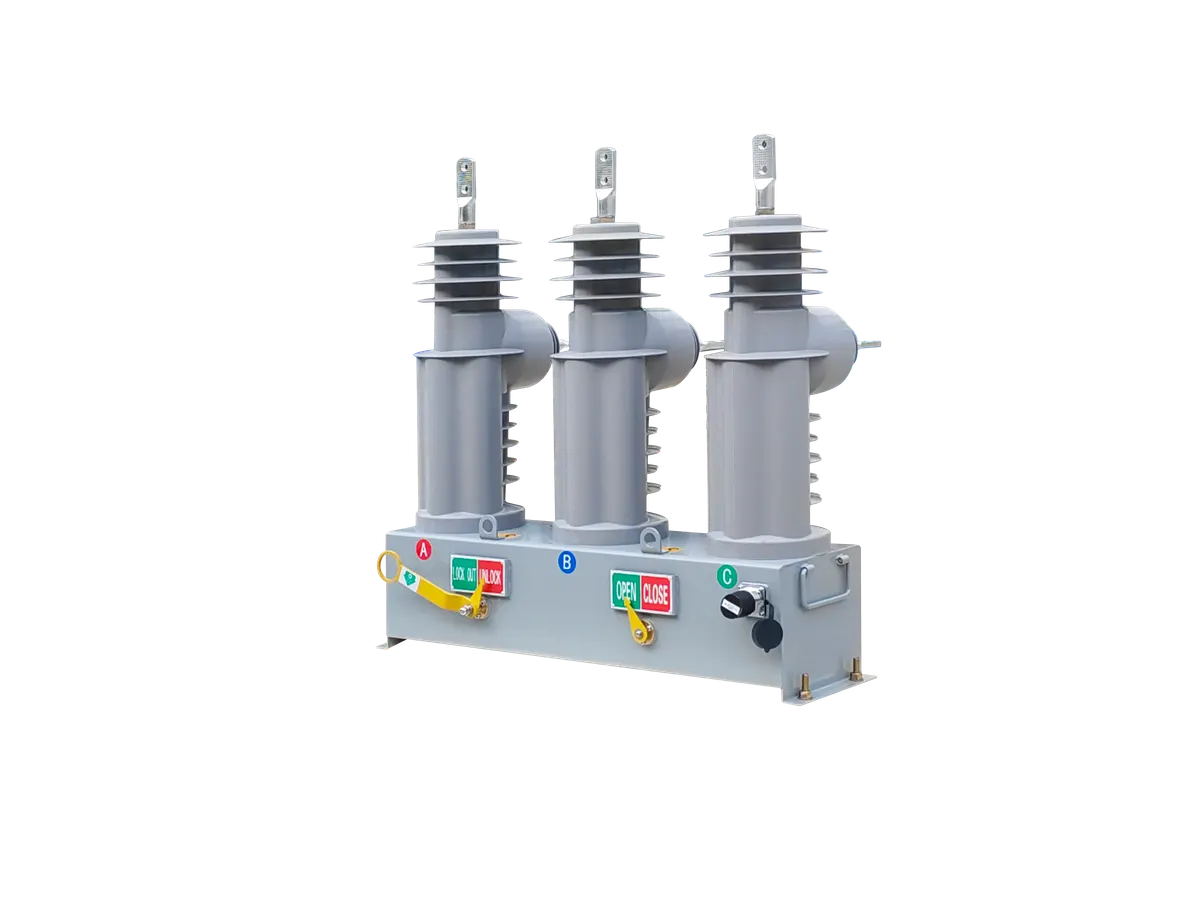
| 11 kV (also 13.8 kV class networks) | 15.5 kV | 15.5 kV outdoor auto recloser | 50 kV | 110 kV | 11±1 mm |
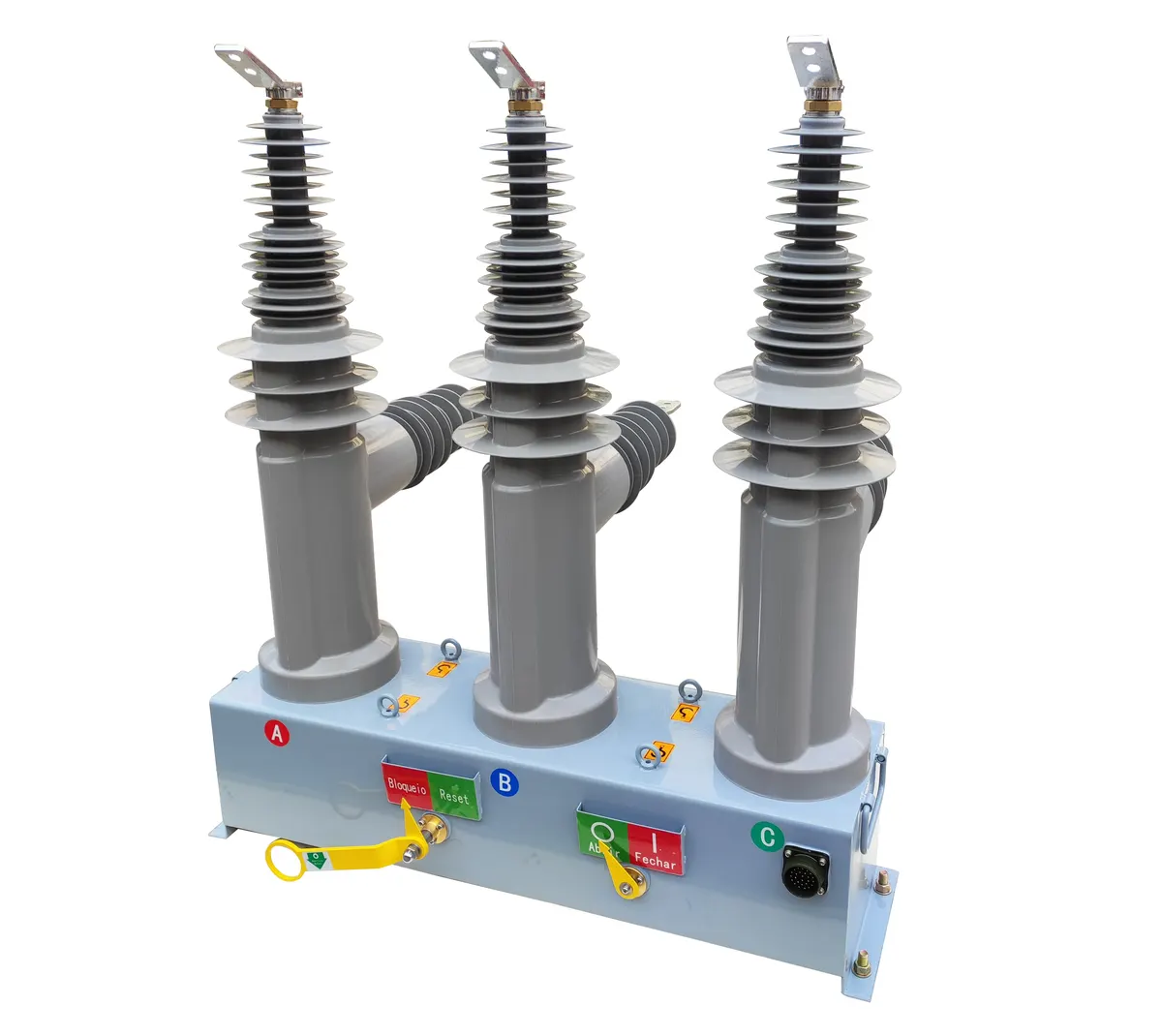
| 20–24 kV (including 22 kV) | 27 kV | 27 kV outdoor auto recloser | 70 kV | 150 kV | 12±1 mm |
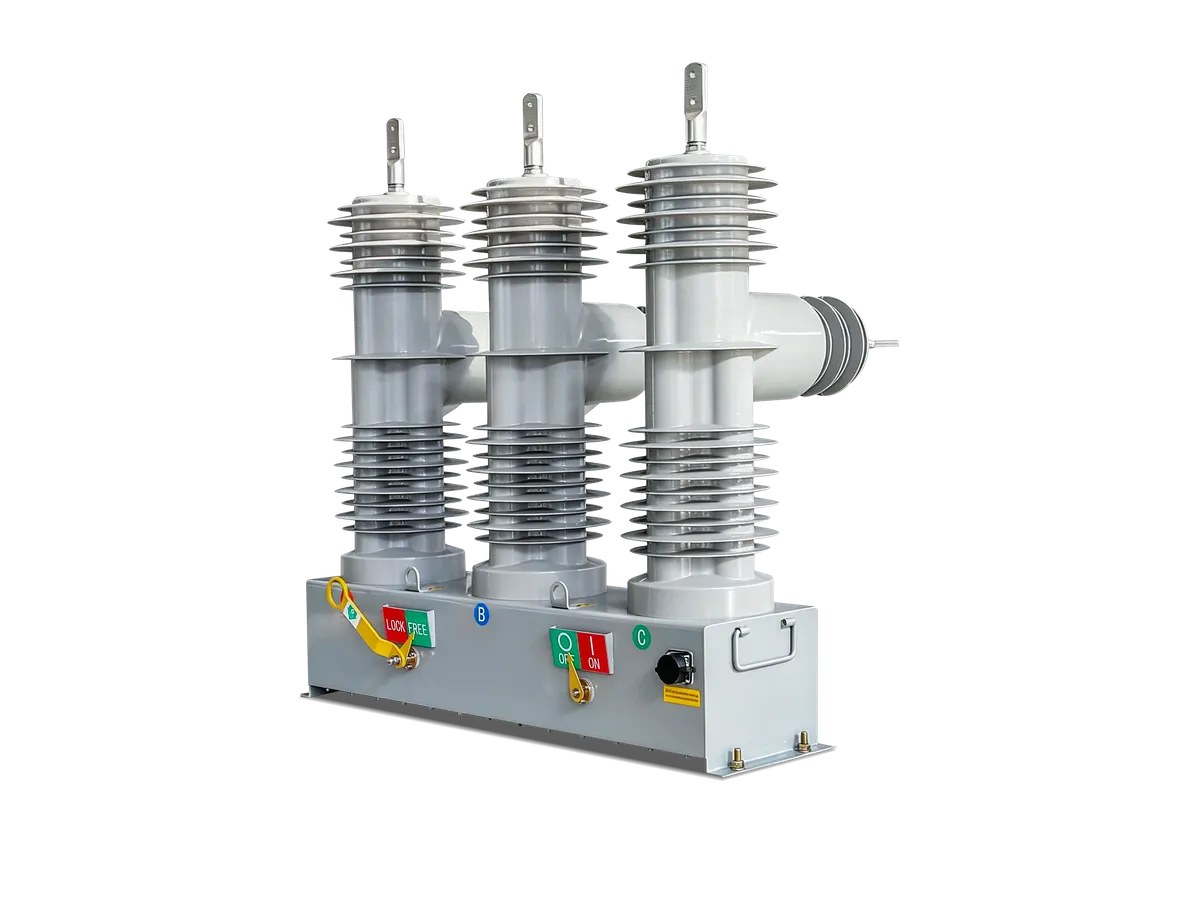
| 33 kV | 38 kV | 38 kV outdoor auto recloser | 70 kV | 170 kV | 15±1 mm |
Two checks matter at this step. First, confirm the maximum operating voltage of your network, including tap settings at the substation. A network that runs at 11.5–12 kV at light load still fits a 15.5 kV class unit, but always check, never assume. Second, check that the recloser class appears in your utility's own purchase specification. Many utilities write the class into their standard, for example a 15 kV class for urban feeders or separate 22 kV and 35 kV specifications for national grids.
Step 2: Check Insulation Level, Altitude and Pollution
The lightning impulse withstand level (BIL) is the rating that protects your investment on an exposed overhead line. Inside one voltage class, the BIL can differ between makers and between models, so compare it directly. In the NAIJI range the step-ups are 110 kV, 150 kV and 170 kV peak for the 15.5, 27 and 38 kV models.
Altitude. External insulation is normally rated up to 1,000 m. Above that, IEC 62271-1 requires an altitude correction, so a unit installed at 2,500 m needs either a higher-rated design or confirmation from the maker that the type tests cover that altitude. NAIJI's 15.5 kV recloser datasheet states suitability for altitudes up to 2,000 m. State your actual altitude in the RFQ for any class.
Pollution and creepage. Coastal, desert and industrial sites need longer creepage distances on the bushings. State the pollution level of the site (IEC 60815 classes) so the supplier can confirm the creepage distance. The NAIJI 15.5 kV model is rated for pollution level IV, the 27 kV model has upgraded insulation distances, and the 38 kV model has upgraded insulation and creepage distances for its higher voltage class.
Surge arresters. Specify arresters on both the source and load side of the recloser. When the recloser is open, either side can be hit by a lightning surge, and the open contact gap is then the weakest point.
Step 3: Size Continuous Current and Fault Interrupting Rating
Continuous current is rarely the limiting factor on distribution feeders. All three NAIJI outdoor reclosers are rated 630 A, which covers the normal load of most overhead feeders. Check it anyway against peak load plus any planned load transfer during network reconfiguration.
Short-circuit breaking current is where most specification errors happen. Follow these rules:
- Calculate the maximum three-phase and earth-fault current at the pole. Fault current falls with distance from the substation, but a recloser close to the substation sees almost the full busbar fault level.
- Add margin for network growth, such as a new transformer, a parallel feeder or embedded generation, over the 20+ year life of the device.
- Ask for the type-test report covering the rated short-circuit breaking current and the operating duty (the trip-reclose sequence). A brochure figure without a test report is not evidence.
Our short-circuit rating calculation guide shows how to work out fault current at a given point. Not every protection point needs a recloser. Where a branch only needs fault interruption without reclosing, a vacuum fault interrupter may be enough. A sectionalizer cannot interrupt fault current at all: it counts the operations of an upstream recloser and opens during the dead time, so it only works in coordination with an upstream recloser or reclosing circuit breaker. See recloser vs sectionalizer for that trade-off.
Not sure which class or rating fits your line? Send us your system voltage, fault level at the installation point and controller requirements. Our engineers will check them against the NAIJI auto recloser range and reply with a datasheet. Request a recloser datasheet →
Step 4: Choose the Phase Configuration
"Pole-mounted recloser" covers three different device layouts. Decide which one you need before you compare prices, because they solve different problems.
| Configuration | How it trips | Best fit | Watch out for |
|---|---|---|---|
| Three-phase, ganged (single mechanism) | All three phases open and close together | Main feeders with three-phase motor load; simple protection schemes | A single-phase fault interrupts all customers on the section |
| Three-phase, independent mechanisms | Each phase has its own actuator; single-phase tripping is possible when the controller supports it | Feeders with mostly single-phase load; utilities that want single-phase trip / three-phase lockout schemes | Three-phase motors downstream need protection against running on two phases |
| Single-phase (cutout-mounted or full-size single-phase) | One phase only | Single-phase laterals and single-phase lines | Cutout-mounted units have much lower current and fault ratings than feeder reclosers; check ratings model by model |
NAIJI's 27 kV and 38 kV reclosers are available in both three-phase ganged and three-phase independent mechanism configurations. Independent mechanisms are preferred for most export projects because they leave the trip strategy open to the utility's protection engineers. NAIJI's recloser range is three-phase; cutout-mounted single-phase reclosers are not part of it. For that use case, see our lateral protection comparison.
Step 5: Compare the Actuator, Interrupter and Enclosure
Modern pole-mounted reclosers use vacuum interrupters. The differences between makers sit in the actuator, the pole insulation and the enclosure. These are the points to compare on a datasheet:
| Item | What to ask for | NAIJI outdoor auto recloser (all three classes) |
|---|---|---|
| Actuator | Magnetic or spring; number of moving parts; mechanical life | Monostable permanent-magnet actuator, no spring charging; 10,000 mechanical operations |
| Operating times | Closing and opening time; phase synchronisation | Closing ≤60 ms, opening ≤45 ms |
| Interrupter poles | Solid-insulated or oil/gas filled; partial discharge level | Solid-insulated vacuum interrupter poles (silicone + epoxy resin); partial discharge ≤20 pC |
| Built-in CTs | Ratio and accuracy class for protection and metering | 600A/1A, class 0.5S (5P10) |
| Enclosure | Material, ingress protection, corrosion protection | 304/316 stainless steel with outdoor corrosion protection (powder coat on the 15.5 kV and 27 kV models); IP65/IP67 rating listed for the series |
| Climate | Minimum and maximum ambient temperature | -40°C to +45°C |
A permanent-magnet actuator holds the contacts closed magnetically and needs only a short pulse from the control to open or close. It has far fewer moving parts than a spring mechanism. That matters on a recloser, which may operate several times for a single fault event. Spring-operated reclosers also exist, so the mechanism alone does not define a recloser: the integrated reclosing control and the recloser type tests do. A pole-mounted vacuum circuit breaker without that control is a different product, even if it is later paired with a protection relay.
Step 6: Specify the Controller and Communications
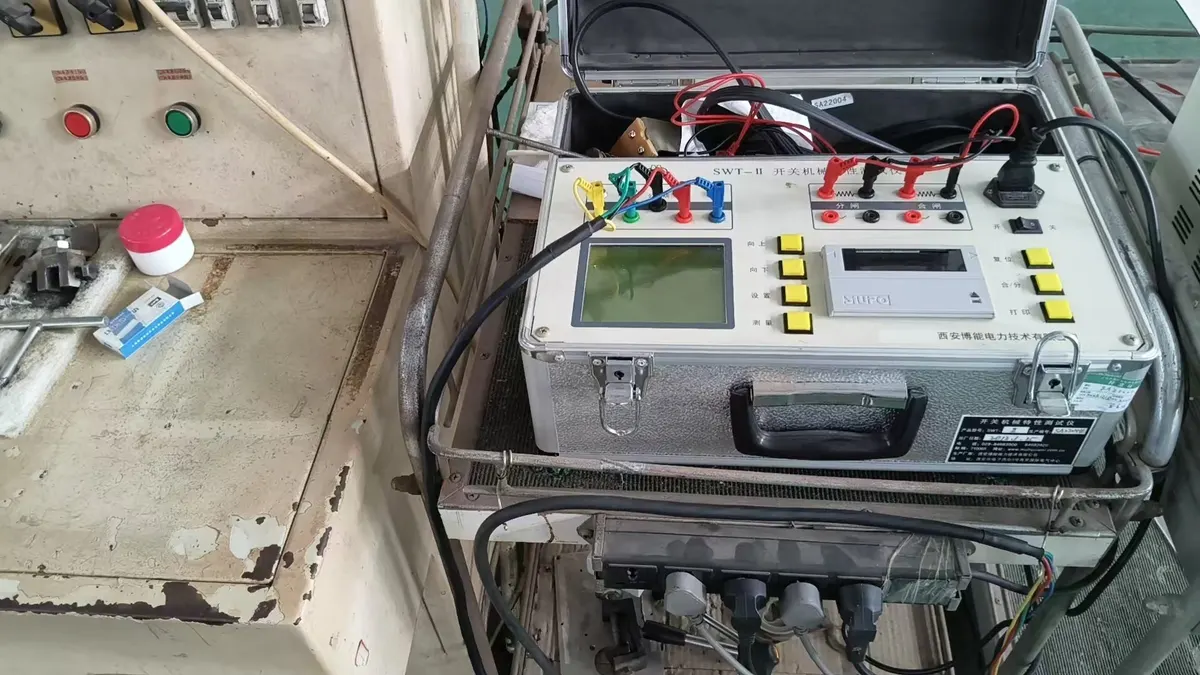
The controller decides how the recloser behaves on your network. Two reclosers with identical interrupters can perform very differently because of the control. Specify these items explicitly:
- Protection functions: phase and earth overcurrent with selectable IEC and IEEE time-current curves, sensitive earth fault for high-resistance faults, and directional elements where the line can be fed from both ends or has embedded generation.
- Reclose sequence: number of trips to lockout (commonly up to four), fast and delayed curves, dead times and reset time. Ask for at least two setting groups if you need seasonal or emergency settings, such as non-reclose during high fire risk.
- Communications: the SCADA protocol your control centre uses (for example DNP3 or IEC 60870-5-101/104) and the medium (4G/cellular, fibre or radio). If you plan feeder automation or FLISR, list it in the RFQ so the controller and communications can be matched.
- Control power: where the controller gets power (an auxiliary transformer or a voltage transformer on the line) and the battery backup time you need during an outage.
- Data: event and fault records, load profiles and local or remote setting access.
The built-in CTs feed the controller's protection and measurement. On NAIJI reclosers these are 600A/1A with a 0.5S metering accuracy class and 5P10 protection class, so the same CTs can serve both feeder metering and protection. Our product pages do not list a fixed controller model, so confirm the controller model and its functions on the project datasheet before you order.
Step 7: Plan Mounting, Accessories and Testing
A recloser on a pole is a small substation. The accessories decide how easy it is to install and maintain:
- Mounting frame for your pole type (concrete, steel or wood) and the layout you use, such as a centre-mounted or cross-arm arrangement.
- Surge arresters on both sides, as described in Step 2.
- Bypass and isolating switches, so the recloser can be removed for maintenance without an outage.
- Control cable length between the recloser tank and the control cabinet, sized for your pole height and the cabinet mounting position.
For acceptance, ask for type-test reports to IEC 62271-111 and, where your utility uses it, IEEE C37.60. Also ask for routine test records for every unit: power-frequency withstand, mechanical timing, contact resistance and partial discharge. NAIJI's 27 kV and 38 kV reclosers are compliant with both IEC 62271-111 and IEEE C37.60. The 15.5 kV model is built to IEC 62271-111.
Pole-Mounted Recloser RFQ Checklist (Copy Into Your Inquiry)
Suppliers can only quote like-for-like when they receive the same data. Copy this table into your inquiry and fill in the right-hand column:
| # | Parameter | Your value |
|---|---|---|
| 1 | Nominal / maximum system voltage (kV) | e.g. 33 / 36 |
| 2 | Frequency (50 or 60 Hz) and system earthing | |
| 3 | Maximum fault current at the installation point (kA), three-phase and earth fault | |
| 4 | Maximum load current (A) | |
| 5 | Required lightning impulse withstand (kV peak) | |
| 6 | Installation altitude (m), pollution level, ambient temperature range | |
| 7 | Phase configuration: three-phase ganged or independent | |
| 8 | Protection functions and reclose sequence | |
| 9 | SCADA protocol and communication medium | |
| 10 | Control power source and battery backup time | |
| 11 | Mounting frame, surge arresters, bypass / isolating switches | |
| 12 | Applicable standard (IEC 62271-111 / IEEE C37.60) and required test reports | |
| 13 | Quantity, destination port and required delivery date |
Next Step
Once you have filled in rows 1–7, the class and configuration of the recloser are fixed. Rows 8–12 then decide the controller and accessory package. Compare the three NAIJI models on the auto recloser product page, or send us your completed checklist for a datasheet and FOB quotation.
Related guides: What Is a Distribution Recloser? | Recloser vs Sectionalizer | TripSaver vs Recloser | Vacuum Fault Interrupter Guide